
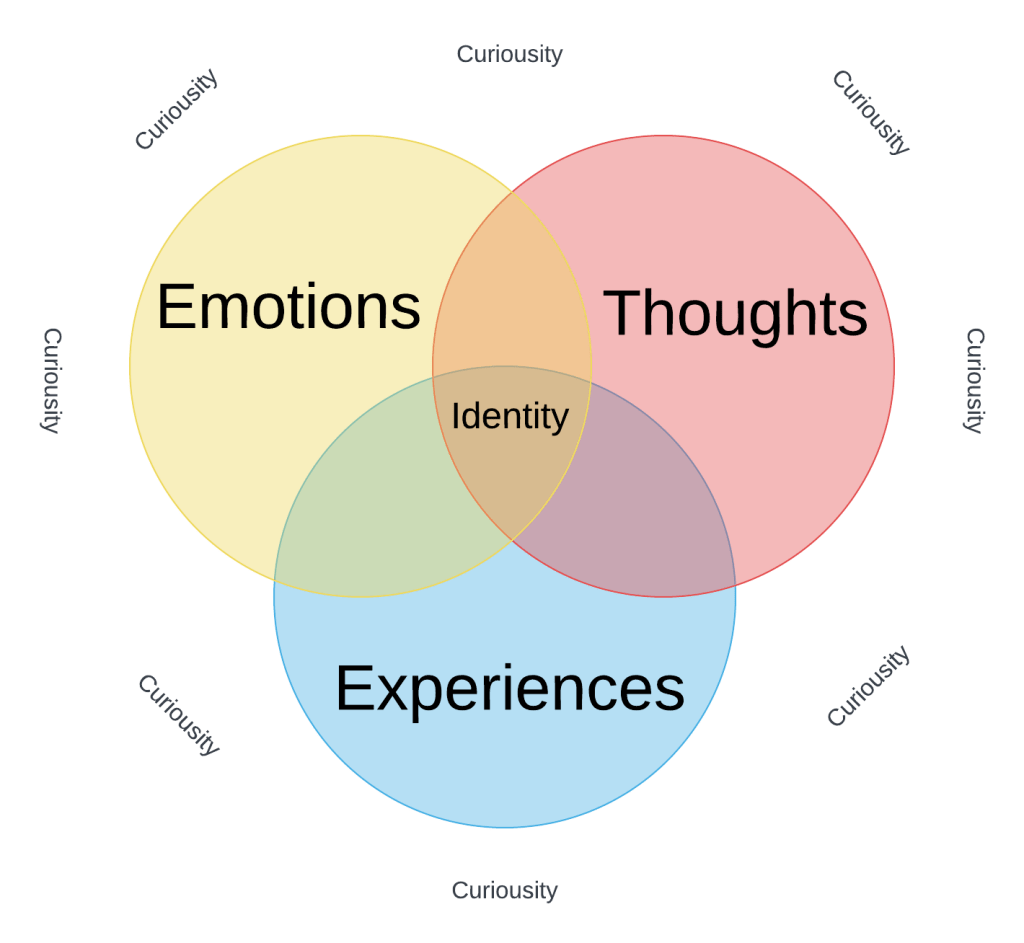
Curiosity is often seen as an outward-looking trait, a desire to explore and understand the world beyond ourselves. We admire it in children, marveling at their natural inquisitiveness and willingness to learn. However, as we transition into adulthood, our identities become more fixed, and our curiosity about the external world is often filtered through the lens of our lived experiences. This can sometimes lead to a shutting down of curiosity in favor of safety, acceptance, or control.
I want to explore how we can shift our focus and allow ourselves to be curious in new ways, and how this can foster personal growth and help us navigate the world more effectively.
Decoupling Identity from Emotions, Thoughts, and Experiences
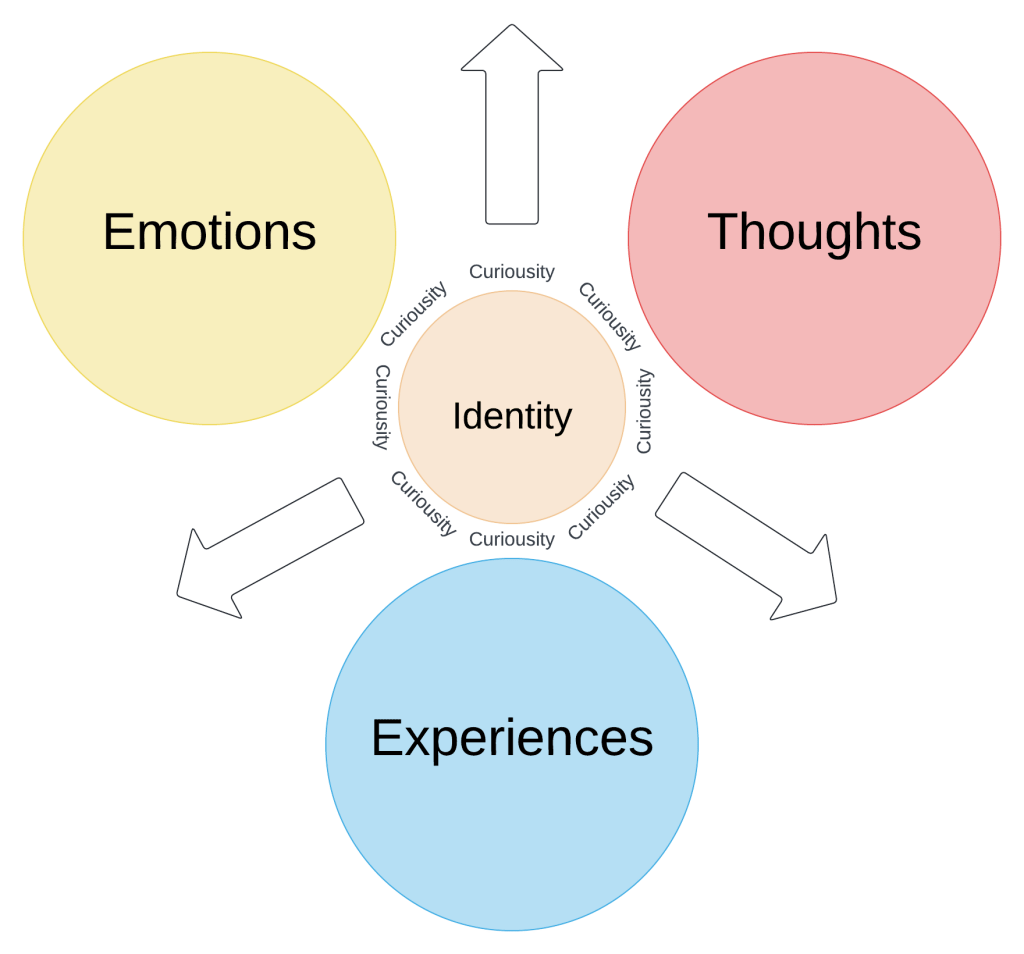
The first step in this journey is to separate our identity from our emotions, thoughts, and experiences. We all know individuals whose identities are tightly intertwined with their beliefs and thoughts, or whose past experiences hinder their ability to see the world with an open mind. In such cases, injecting a small amount of curiosity between our sense of self and these constructs can be transformative.
Imagine creating a tiny bit of space between your inner identity and your emotions, thoughts, or experiences. This space allows us to ask curious questions like, “Why do I believe this?” or “Why does this situation make me angry?” These questions are not meant to invalidate our feelings but to recognize them as external to our core selves. This recognition provides a sense of safety, acknowledging that these constructs are malleable and open to change. When these constructs are closely tied to our identities, any challenge to them feels like a threat to our very selves.
Extending Curiosity Beyond Mental Constructs
Creating space between our identity and our mental constructs allows our curiosity to extend into the outside world with less influence from the biases and lenses we typically wear. We can still reference these aspects of ourselves, but we gain the freedom to not be entirely governed by them.
A Practical Approach to Cultivating Curiosity
Here’s a practical exercise you can try. The next time you find yourself closing off to something or feeling triggered by an external event—be it from a coworker, partner, or friend—pause for a moment. Instead of directing your curiosity toward the external trigger, turn it inward. Insert a small amount of curiosity between yourself and the internal reaction you’re experiencing.
Ask yourself questions like, “What is this reaction telling me?” or “Why am I feeling this way?” By doing this, you create a buffer that allows you to respond more thoughtfully and less reactively. This practice helps you understand your internal landscape better and empowers you to make conscious decisions about your responses.
Conclusion
Curiosity isn’t just about exploring the world around us; it’s also about exploring our inner landscapes. By decoupling our identity from our emotions, thoughts, and experiences, and by fostering a sense of curiosity about our internal reactions, we can grow and navigate the world with greater ease and understanding. Embrace this shift in curiosity, and watch how it transforms your interactions and personal growth.
Let’s go deeper.
I’d love to know what challenges you’re facing on your journey, and how I can help.
 Lucas Whitman